
People have told me since I got out of grad school that one day I would get the itch to go back and go after a doctorate.
For years, I said, “Never. No way. Not happening.”
I hate research, like despise it. I enjoy reading and learning from research findings, but the act of collecting data scares the daylights out of me.
The day we went over statistics in grad school and discussed how to analyze data points and the frequency and what nots, I went home and cried. In all seriousness, I may have teared up in the class because it was so over my head and I just couldn’t grasp it. I was so overwhelmed from the information. I was beyond frustrated by the fact that I just could not comprehend how those tables and numbers explained something. I had never felt so stupid and embarrassed that as a graduate student I just didn’t get it.
(I must mention that I am fairly stubborn, so if I don’t get something right away, I generally avoid it like the plague. I don’t like that feeling of inadequacy at all.)
From that experience, I vowed never to pursue a degree that required actual research. I didn’t ever want to feel that way again, and I knew I wasn’t going to intentionally put myself in a program that required me to take more classes on statistics or research analysis. That one day in grad school was enough exposure for me! So I have been merrily running away from anything statistical or doctoral for the past four years. I thought I had shut that door permanently and was content not searching for positions that required a doctorate. I don’t see myself in higher level positions anyway.
That was until I heard this podcast.
This by far is the best interview I have ever heard, mostly because it stirred something in me.
Rosina McAlpine is a visit scholar at the University of San Diego and originally from Australia. What intrigued me the most was how she came to infuse higher education theories to create a base for learning strategies as a faculty member.
My passion is in academic coaching. I really enjoy working one on one with students to assess their goals and explore new strategies to help them become owners of their educational experience. They can only control how they react so let’s make sure the student has all the tools they need to be successful.
But I am always stumped with how to approach them when underneath it all is the issue that “the professor doesn’t know how to teach.”
As a side note, before I get to this point I do try to help the student adjust and analyze their own reactions to that instruction and develop strategies to adapt to any style. I do understand that education is a two way process and the student needs to be responsible for their part. Just need to make sure that is said.
However I feel that this is a growing trend in higher education with how tenure works and research expectations with a little teaching on the side. Teaching styles will need to vary from a 20 person class to 300 people, or even in person to online. From my observation, a big concern for students is when they can’t learn from the professor.
Especially when they are paying for it.
The requirements for faculty and instructors will be different from school to school. What is expected of academic folk can depend on how long they have been there, tenure status, university mission, private vs public, and the list goes on.
I began to wonder though:
- How many actually require some teaching experience or provide some instruction along the way on classroom strategies.
- How many are going off their own experience of talking at the student, giving roll, and providing answers?
- Do professor training programs exist? If so, what do they look like? And how many are required?
Now I see from my very little exploring that there are schools that do offer various types of professional development, but most of these seem to be optional.
This interview spoke to me on so many levels of learning. Coming from a teaching certification background, I like to look at the educational process as a whole and see what all parties are doing with this investment.
How do we motivate and inspire students to work in the classroom? What is student learning to professors and are they engaging students beyond handing out a grade? What are students actually learning, and are they effectively learning? So many questions!
There are many wickedly intelligent people on the university campus. However just because they are the most talented physicist does not mean they are able to teach worth a lick.
Teaching takes skill and passion. Even in my own college experience, I could tell which professors where there for the subject versus the student. I will tell you that I respected and learned more from professors who were invested in my learning experience in addition to the facts about history.
Rosina McAlpine discussed the fact that many students pick a major and aren’t even excited about that. Why aren’t we doing more to infuse passion and excitement into learning? Are we just expecting a grade, or are we expecting them to become a new person because of the change that has occurred in the classroom?
Obviously I buy into holistic learning seeing as I am supporting students outside of the classroom and value student growth. The holistic approach comes with the territory of being a Student Affairs professional. It made me start to wonder why is this not a thing with the academic side of the house?
I have so many questions that have spurred from this one podcast.
- Why aren’t faculty shown how college students develop and ways to motivate this population in their educational experience?
- And if they are, is there a trend with certain degree programs, types of universities, state legislation?
- Are we expecting too much from faculty that it detracts from student development? Some faculty teach several courses in addition to being advisers, committee chairs, researchers, presenters, etc. As with many professionals, faculty are pulled in a lot of directions. So does this leave less time for a student focus?
- Are learning theory questions asked when they are interviewed? What exactly do we know about their teaching style when offered a contract?
- Do schools offer additional trainings or professional development throughout one’s career? Are they optional or required? Do faculty senates play a role here?
- Is there a correlation in graduation rates/employment status for graduates with schools that do have a focus on teaching development?
- Why do we expect K-12 school educators to undergo massive training requirements and not expect similar for higher education professionals?
- Do students even care? Is this something that would encourage more students to apply to a program knowing that their professors are not only biologists but certified teachers?
- What makes a good teacher? Are these skills we are looking for when hiring faculty?
- And what about graduate students and teaching assistants who instruct classes, do they have instructions or are they just thrown to the wind?
Now I understand that this is still very surface level for me. If you know programs out there that answer some of these topics, please do share with me! I am just starting to raise the questions for myself, and by no means view myself as an expert with faculty expectations. I am not here to critique and say that all professors are not effective as teachers. I really value my educational experience, and I had some phenomenal educators that have stuck with me years after the class ended. In my time as a professional, I have worked with some fantastic professors and know they are doing amazing things with our students.
Unfortunately though, I have had too many experiences with the other side of the coin that I am worried.
I am owning my biased concern that I feel that universities focus more on outside classroom merits for faculty than they do on how they can teach a student. While I do understand that there is value in having faculty who are doing great research or writing articles and the what have you, I have to ask what good is all of that if they cannot inspire a new incoming architecture major in the classroom for the first time. Where is our focus: school reputation or the student learning? Can there a good balance of both? Faculty are molding the next generation in their field; I would hope that they would want all the best techniques to do so. I feel that this is not happening as much as it should. Again, this is my own observation and naivete on the subject coming out here. This is why I ask the question so I can learn more and understand the philosophy of faculty development.
I think there is something to be said though about the fact that so many students do struggle with some professors, or that when they sign up for classes they will avoid certain sections because they know that professor is a dud, and they will not learn anything or will struggle trying to understand because of the way information is presented. Too often, I’ve heard the phrase that there are professors who don’t care and aren’t willing to help or change the way the course is taught even if the majority of the class is below average. That is an issue for me.
I do recognize that there is a lot of student mindset training that goes along with this. Students do need to be responsible for adapting and taking control of their own learning, and not to blame everything on how information is presented to them. However when you hear this constantly, it makes you wonder why so many are saying it and if the fault really does lie with the student or are there methods and strategies we can be offering faculty as well?
If learning is to be a two way street, why are we only focusing on one side of the street for repairs?
While I have worked on the student end for many years and worked among their learning theories, it has made me curious about the theories and development on professors.
As you can see from my thought overload, this left me wanting to know more, wanting to dig deeper.
But since I hate research, I don’t even know where to begin answering these questions.
Why don’t I go back to school? Is it really just that silly data program that is holding me back? (In fact, yes it was.)
Tom has been telling me for years that I should just go for it and become Dr. Whitener.
Just as everyone has told me, the itch hit me like a wave. I am wanting to go back for that next degree. I have been out of the classroom for four years now, and I am now dying to go back.
To everyone who said it would happen and took my scowls at the idea of it, you can now tell me “I told you so.”
I really do want to understand this topic more. I feel that it would be so valuable to universities to look at on so many different levels. Again I ask, why do we expect a teaching degree for K-12, but only expect a history degree for a history professor at the university?
My research focus is somewhere in all that mess of questions. It’s a start right?
I won’t be undertaking this anytime soon because who knows what is going to happen to our personal situation in the next couple years, so I would like to be a little more settled before I begin this journey. I am however starting the process of exploring options of degrees/schools and delving more into what I can find online for this topic in the meantime.
If you have articles or know people to get me in touch with to discuss this further, I would love things to be sent my way! I wasn’t able to find a whole lot out there on this so far, so if someone can lead me in the right direction I would appreciate it. I am really interested in professor development so we can help university students in the classroom more. And anything I can learn in the meantime would be great!
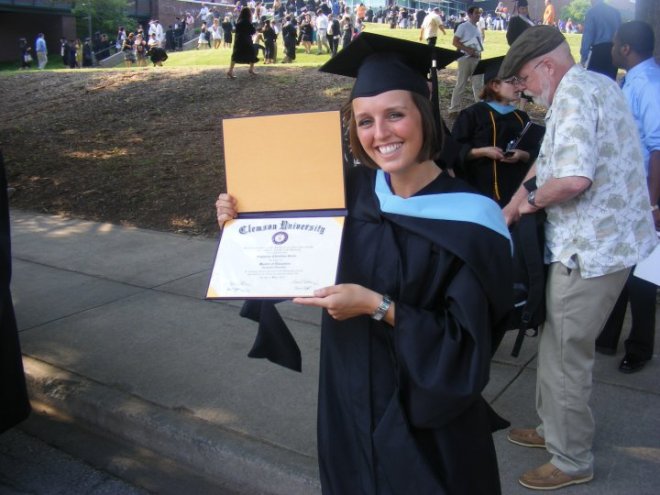
It would be nice to have a degree with Stephanie Whitener on it…just saying.
In addition to all this, that podcast also explored how women have a huge impact on the roles they have been given. She talked about work life balance as an educator, spouse, and mother in the most realistic way. I appreciated her candor and honesty about things. It was real. She talked about compromise in a way that makes you realize that it is really not discussed in education or social fundamentals.
It really is great to listen to if you have time!
Changed my life obviously.










 findingmyyellow.com