A Career Pivot

A Career Pivot

After much reflection, some deep breaths, and so much prayer, I’ve made the decision to leave my job.

I have been working at Columbia College for almost 11 years, and in higher education roles for just over 20 years.

This wasn’t an easy decision. I’ve grown here—professionally and personally. I’ve built strong relationships, worked on projects that challenged me, and felt incredibly proud of what my team and I accomplished together. In many ways, this place has become a second home. My kids have only known me in this job, and have grown up coming to campus events. But sometimes, even when you were really good at something and there is comfort there, you realize it’s time to grow in a different direction.

This is bittersweet, but it has been a very intentional and drawn out decision for me. I don’t think we talk about these things enough, so here I am sharing some of my decision making moments. Some of it is selfish for me to process what led to now, but I also hope that it resonates with others who are contemplating their next step.

So let’s go back a little bit.
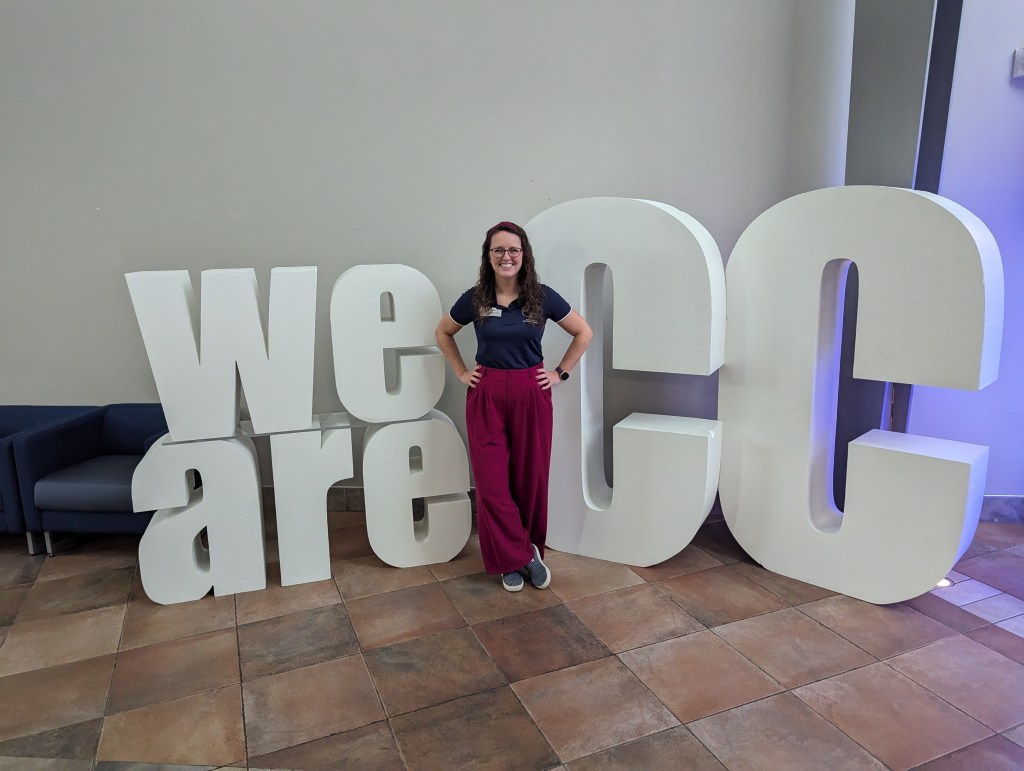
I have been able to build my career based around student success. I started my higher ed experience working in Residence Life, then moved to Accessibility Services, and then landed a role at my current institution in a Student Affairs adjacent role in Student Success and retention efforts. I started here as a Student Success Advisor, and then continued working my way up in leadership positions. I am really proud of being able to say that I am the Senior Director of Advising, Retention, and Student Success, and the fact that I have Registrar on my list of career accomplishments is cool too. If I would have told my younger self where I ended up, I would not have believed it. I never imagined this path, but it has been a blessing to be able to grow into. However, the last few years have been challenging to say the least with the opportunities that were in front of me. I was part of leading two different office merges, took supervision of a team where my knowledge was limited, navigated institutional layoffs, persisted through college leadership changes, and just generally existed in the craziness that is the higher ed landscape right now. I felt good about my place here and felt like each change was an opportunity to influence the student experience in new ways. I felt like climbing the “ladder” in my positions would equip me to affect change at new heights and at a greater scale.

After Tom’s health declined last summer, it really made me stop in my tracks to think about what I was really after with my career. Where was I dedicating my time? I saw life differently then, and I started to feel a quiet nudge. At first it was just a whisper: a sense that maybe there was something more I needed to explore, something different I needed to learn, or a new challenge I needed to face. As time went on, that whisper grew louder. And eventually, I knew I had to listen.

I realized I was chasing a career ladder, and I wasn’t getting it.

I started asking myself what would the next leadership ACTUALLY mean for me and did it really align with my values and passions. And why was I actually feeling so compelled to have that recognition when that has never been important to me? I was extremely conflicted on why that next promotion meant so much. I started looking around me and the spaces I was in questioning the work I was doing. To be clear, the work I was doing was valuable and important, I just didn’t feel clear on where I stood in the mix of it. It was a rollercoaster of emotions of being grateful for my job and the doors that were opened for me, but also feeling like I wasn’t in the right place anymore.

As I was teaching my first year seminar this fall, I realized I was really missing the mark on why I joined higher education. I have always taught one class to keep me in touch with the student voice. Staying connected to students was important to me as I moved up in roles that took me away from the front lines. I had accepted each leadership position ultimately because I felt that each new step offered new opportunities to help the student experience through my expertise and leadership, and I truly felt called to collaborate at a higher level on student focused initiatives. However, I was really losing why I got into it in the first place. It wasn’t about titles or being in leadership.

I wanted to be in front of students.

I remember when I was a kid, I made my brother play school all the time. I had a dream of being a teacher for as long as I can remember. I ended up getting my degree in Social Studies Education. However, as I was doing my observations in college, I knew I wasn’t ready at that point to be in a classroom. The reasons are complicated and a story for another day, but honestly part of me was scared to take that step. I was really thriving in my own college experience, and so I never left that comfort and have been working on a college campus for the last 20 years focusing on student learning in a different way.

I will never regret the steps that I took along the way. I have loved the roles I have had at several institutions. I have met some amazing individuals (students and colleagues, and sometimes students turned colleagues). I have been able to travel across the country to live and visit. It gave me my degrees debt free. I was able to learn the art of ordering pizzas and how to analyze data for student success. I learned how to strategize initiatives, how to stand-up different technology platforms, about leadership development, and ultimately a lot about showing up as a human being in different spaces and how to advocate for students.

This decision was complex because I have been here a long time, and higher education is the only professional job I have known. Leaving a job isn’t just about leaving tasks or titles, while there are some projects I wish I could see play out. It’s about leaving people—coworkers who’ve become collaborators, mentors who’ve become friends, and a rhythm that’s become familiar.

But when I stripped it down, this job was no longer serving me how I needed. It is not that I didn’t like my job or that I didn’t agree with the vision of where the college was going. That was why it was so hard to make this decision because I am really excited where CC is headed and there are some really amazing people working really hard to make higher ed accessible and successful for students. I just came to grips with the fact that it wasn’t for ME anymore. I wasn’t connecting to myself, and the leadership wasn’t fulfilling me in the way I had hoped, and I was just feeling bogged down by the weight of it all. Change management and leadership is really hard, and I just wasn’t confident that I had it in me to keep driving that bus. It is hard to keep going when your heart is telling you to go in a different direction. And if your heart isn’t into it, even if you do believe in the work, the decision to stay is complicated. So I leaned into that whisper that it was time to circle back to the classroom. I didn’t want to run from the dream I had as a kid anymore.

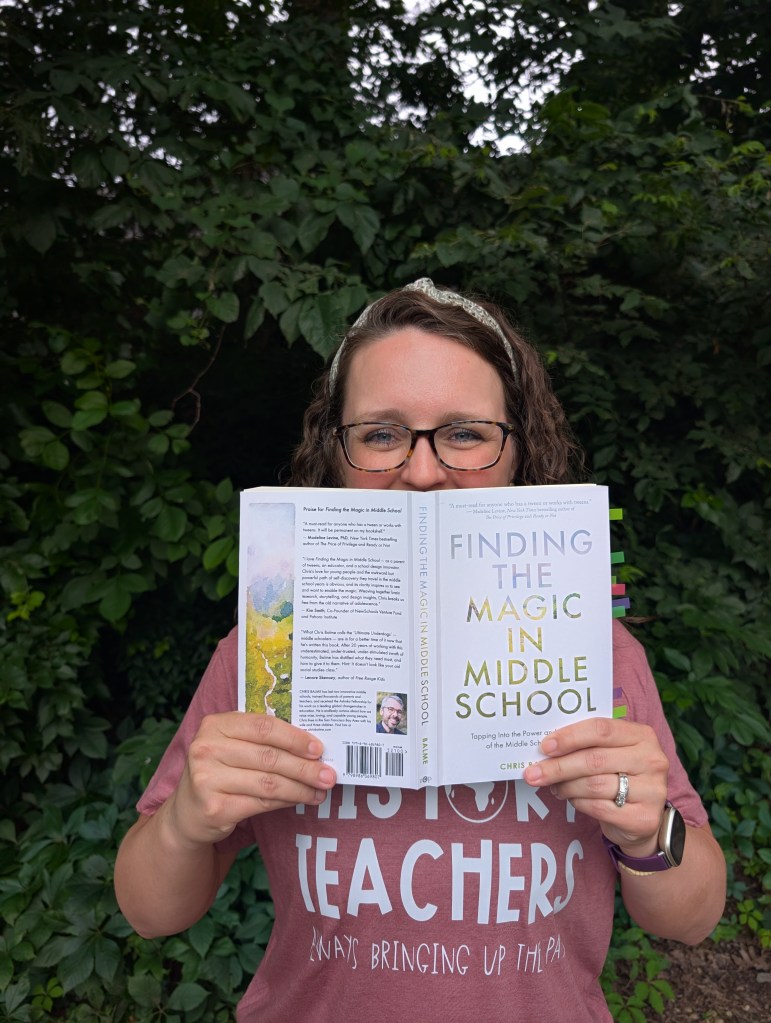
Next fall I am going to be teaching 8th grade Social Studies, and I get giddy every time I think about this next experience. I’m stepping into the unknown, and while that’s scary, it’s also full of possibility. What I do have is a deep sense of gratitude and a willingness to keep learning, keep growing, and keep building something meaningful—wherever that may be. I also know there is a different confidence in me that was not there when I was 22 graduating with my education degree. While I am realizing teaching was the plan the whole time, so was my higher ed path. This “detour” in higher ed was an important step to becoming the teacher I always wanted to be. The last two decades have shown me so much that I can infuse into my curriculum in the middle school level. I cannot be more excited to create magic in middle school.

As Tom’s situation last year highlighted for me, I only get to do this life once. And I am feeling called to impact education differently. I am sad to leave people and projects I have been working so closely on. So while I do have moments of immense guilt, I know this is were God is calling me to be. And at the end of the day, I had to make the decision for myself.

I would also be remiss to not acknowledge what this change means for my family balance and how that played into the decision. Switching to the K-12 system is giving me a new ability to be on my kid’s schedule. To be on the same breaks without worrying that I am missing important meetings or having to take PTO is really a gift. To be able to get time back with them is invaluable. I had been giving so much of myself away to my job over the last few years; it has been really hard to also be a mom and wife. I am not naive to think that being a teacher is not going to take a lot of mental energy, but this is allowing me to have a break and put in new boundaries that focus on mine and my family’s needs. There is something to be said about letting go of my current job so I can shed some of the expectations I had for myself to do all the things. I have the ability to start over fresh with a new lens.

To everyone I’ve worked with: thank you. Thank you for the trust, the partnership, the patience, and the joy. I am so proud of the big and little moments over the years. Thank you for being a part of this chapter in my story. It has been a good one.

And to those who are reading this and maybe feeling their own nudge to make a change—listen to it. It’s okay to outgrow something, even something you love. Growth isn’t always loud. Sometimes it’s just a quiet, persistent whisper that says, you’re ready.

Here’s to new beginnings and remembering your why.
Why Professional Development can be Magical

Maybe it’s because I am watching the Disney episode of Dancing with the Stars, or that I spent some time this week at a Disney attraction, but conferences can be magical.

IMG_20191014_162051_675

The past six months have been difficult for me at work. The duties have increased, and it seems that there is never a slow time to catch my breath. I feel some days that I am drowning in meetings and there is never time to do the tasks that come from those meetings.

I have always been firm that I don’t want to work from home after hours, and once I get home to be strictly about my family. But I have found more and more days where I have pulled out my computer after the kids go to bed, or I stayed late to cross things off the to-do lists. And I am always in early to get a head start.

I try to build times into my schedule to do the tasks, but to be honest they often get scheduled over. I hate to think that this will become my norm as a Director, but it has been my current reality. I also feel like you can’t really talk about it or complain about being busy because everyone is and there is the expectation to just get all the things done. I also think it can be difficult to talk about this at your own campus so you don’t let others see you feeling like you aren’t measuring up to your role. Imposter syndrome at it’s finest.

IMG_20191014_164641_547

So I very much needed this conference. I needed a break.

The thing is I love the work that I do. I really find value in what my office is doing, and feel that our initiatives are extremely valuable. I also love the collaborative nature of my role. Reaching across all the tables to see how we can make improvements for the student experience is fun for me. I love to strategically talk through what is happening and brainstorm plans to make things better.

However I was starting to get tunnel vision and worn out from my schedule.

IMG_20191014_162633_157

Professional development is often forgotten or not prioritized, but it is so important. I try to take advantage of things that happen around campus or free webinars, and I have been strategic this year about building intentional PD into my staff dynamic, but there is something about going away to a conference that can bring life back into your work. It does some magic to my soul.

  • When I explain all the things that come from my office to other schools, I am reminded of how proud I am of what we accomplish which is no small feat.
  • It provides an opportunity to hear from leaders in the field and be inspired.
  • It helps you to not feel so isolated in your experience.
  • You are just free to think and brainstorm, which can be magical.
  • I am in my element taking notes and outlining, so it always grounds me.
  • It allows you to not directly look at a problem but take a side view with some outsiders helping you process.
  • I am not expected to be an expert or have to respond. I can just truly be in the moment and soak it all in.
  • It is an opportunity to not reinvent the wheel. There is something about the element of sharing that I get jazzed about. As higher ed institutions we are often in competition, but at these conferences there is a sense of care to help each other, and we share our struggles and wins so we can learn from one another. Again something magical.
  • The chance to engage with colleagues across the nation in general is a surreal experience. I am always amazed at all that we do in Higher Ed. We are changing the world and improving lives.
  • It is a very intentional time to be consumed with my work but not consumed by my job.

The root of it is returning to my why and the intention of this profession. I get all nerdy about all the things. And whereas I was definitely ready to put my out of office up last week, I am ready to get back to it this week and move forward. I don’t have a magical wand, but I am ready to help create a whole new world.

IMG_20191014_170446_257

And having a bed to myself and eating meals at my own pace wasn’t bad either for this worn out soul.

Why do you like conferences?

It’s All in a Day’s Work

If I had a quarter for every time that someone asked me exactly what I do all day…

Well I would have a couple hundred bucks. Maybe. But it still feels like I get asked that all the time.

academic-advisor-449bee9f04cddf06e963053270a08a

image via

I am a Student Success Advisor, which is an Academic Advisor of sorts.

I work at a small private liberal arts college, which means everyone is wearing a lot of hats. And that is no exception for my office of three people.

My office deals with everything. We have a focus on retention work, but that entails everything on the campus level. If you think about it, everything from the caliber of classes down to what is being served in the dining hall affects retention on some level. So naturally we deal with it all.

We have an early alert system where any staff or faculty can write a concern that they have for a student, and then our office either reaches out to that student ourselves or facilitates passing it along to the appropriate area. A huge chunk of our responsibility is managing these alerts and making sure the students who need assistance are receiving it. We do some manual alerts throughout the semester such as attendance, late payments, not meeting with advisor, just to name a few. We are not traditional Academic Advisors in the sense that students do not have to meet with us for registration, but we do assist in registration matters and four year plans.

My main responsibility though is meeting with all the students who are on probation. These are students whose cumulative GPA fell below a 2.0. They are required to meet with me three times during the semester, but most choose to meet more. I have a couple students who are meeting with me every week. We discuss old habits and make goals for new ones. We take a pretty close look at what brought them here to probation and the best plan to get them off. I take a look at them as a whole person. We don’t just talk about classes, but we also take a look at their jobs, families, basically any out of class experience to see how it is impacting them. Usually there is a lot going on with these students that make a difference on their success in the classroom. I also have to have some conversations that getting off of probation is not realistic and advise the student through the next steps. A lot of these students are also raking up loans, so we often discuss that as well. (The financial piece is the most nerve-wracking part of my job.)

You would be surprised by how many students do not come to college prepared AT ALL. They need help to stay. And I feel that my job is to have stark conversations with these individuals and provide them with resources and tools to be successful. I tell them that I am their coach, but ultimately they are the play-makers. I want to leave them in a position where they can do this on their own. I am here to help, but they have to do the work. It’s my job to make suggestions, but it is their job to make the changes. Some choose to, and some don’t. I find though that a lot of these students want to do well, they just have never been taught how to utilize their strengths to make things work for them.

I really do love this approach of coaching students on their academic success. If you think about an athletic coach, the way we approach our advising is the same way. They come in for regular practice and warm-ups, and we facilitate that training. Than they go and perform. It can be an intrusive approach, but generally we see that it helps keep more students on track for graduation who would have given up without the guidance. Our office has become a liaison for students to all things college. It is really amazing the buckets we have our hands in. I think I asked every day last semester, “Is that really our scope?” To which the reply was, “It is now.” I am ok being a catch-all department though because it keeps things interesting. It is also pushing me professionally to delve into areas I have never had experience in (i.e. financial aid).

ffbfb12e64f14ade3f2b900b45fa4073

image via

In the first two weeks of classes this is what my schedule has looked like:

  • 21 individual hour long meetings with probation students
  • Spent at least 10 hours prepping for those meetings (going over transcripts, configuring GPAs for repeated coursework, gathering general knowledge about the student, and creating their coaching folders)
  • Met 3 times with two other staff members about a workshop we were designing for Student Success
  • Put on said workshop
  • Had 3 campus meetings that either pertained to academic advising or retention efforts
  • 2 office staff meetings
  • 1 student staff meeting
  • Assisted with training three new staff members
  • Spent 3 hours working on an online advising certification course I am taking (chapter reading, discussion posts-entry and response)
  • A couple hours working on our second year experience initiative (brainstorming and researching)
  • I am running a pilot mentoring program through our office, so I spent a couple hours working on this. I collected names for mentoring opportunities and contacted those students to set up meetings. I also created a meeting outline for the semester off of things I have used at other institutions-no need to recreate the wheel my friends.
  • Ran attendance alerts and contacted students who missed classes in the first week to remind them of the “withdraw without penalty” deadline
  • Checking in (several times) with probation students who have yet to schedule their appointment with me
  • Every day I update our Retention Alert system with any notes I have from the meetings that day (this can take me anywhere from 5 minutes to an hour depending on the day)
  • Helped organize all the books for our book scholarship that our office does each semester
  • Double checked a colleague’s report on un-used scholarship funds
  • I had a few student walk-in concerns ranging from their schedule being dropped to losing a scholarship. A lot of problem solving time with emails, phone calls, and calming of fears.
  • Handling concerns from our front desk area-the first couple days of classes were particularly nutty
  • And of course email management and other random administrative tasks like data collection happen on a daily basis-some days are slower than others.

I also serve on a couple committees that meet randomly throughout the month. Again most of them pertain to prevention strategies or retention efforts.

So that is what I do in a nutshell!

I really love my job. The only thing missing from my job description to make this THE perfect job is doing something with learning communities. I enjoy getting to work with the at-risk population or those students who are considered in the middle. Helping them be successful gets me jazzed. Academic Coaching is really where my heart is. I love teaching in this individual manner. Giving these students attention sometimes makes all the difference in their success.

And then this is my life. Yes to every.single.statement.

What do you do at your job?

Last Day

This week I had plans to close out my time at Austin Peay as a professional. Tomorrow was supposed to be my last day.

Well, best laid plans go to spoil sometimes.

Tuesday, I spent 4 hours in the hospital for the second week in a row because my doctors are concerned that I have pre-eclampsia. My blood pressure has been way too high these past two weeks, and no matter what I do, I cannot get it to come down. I have never before had any blood pressure problems which made them come to the conclusion it was because of the pregnancy. So I had to be submitted each week to be observed for several hours and have several tests done. (Yesterday I had to collect my pee for 24 hours in a bucket…never thought I would do that.) Right now, they do not believe I have it since all of my additional tests are coming back normal, but I have to be closely monitored from here on out just to be on the safe side.

Which means, I am now on strict bed rest for the rest of the pregnancy and have to go in twice a week for testing.

Which also meant that Tuesday was my last day of work.

Not as much closure as I was hoping for, and I hated leaving my last few projects that I had planned on closing out just half done. But as several people told me as I cried over the bed rest instruction, I have to do what is best for George.

But I digress. This post isn’t supposed to be about the pregnancy, it is about my time at APSU.

Much like my exit from the position, it was never something I expected.

I accepted this position the day Tom came home his deployment. At the time, I was told it was a temporary position that they had intentions of turning into full-time. I was excited about the prospect of helping with that transition, and felt that it was a perfect time to move out of housing.

What I didn’t bargain for was that even as a part-time position, it would be one of the most challenging positions I took on.

More of it was personal challenges as I thought about my self-worth. Being introduced as “part-time” or “temporary” all the time began to take it’s mental toll that I wasn’t actually a true professional. I had to dig down deep many days to be reminded of why I came to work. There were moments were I didn’t feel like I was taken seriously, and I felt like I was just a student worker or less. I had to push those comments aside, and know that this is all part of a plan in the long run, and this is just one of those hurdles that I have to get over.

As frustrating as it was to learn that my position would never go full time due to budgets and the way Obama Care was structured, and also never finding anything else in my field that allowed me to go full time, I am glad I had this position.

It allowed me to do a lot of things that I hadn’t done before.

I became a master at Excel…which for me is saying a lot.

I learned an exorbitant amount on assistive technology, which will help me in the long run when being a resource for students. The things that are available are astounding!

I learned how to speak in disability law and documentation, not fluently but I am much more aware of situations.

I was able to interact with non-traditional students which is something I had not received in my previous housing experiences.

I learned how an office of 4 staff members functions much differently than a department of hundreds.

I had the opportunity to be a classroom aide to two students, which is by far the most eye-opening professional experience I have had to date.

I was able to stay connected to my Student Affairs roots, even if it was just part-time. If anything, I do have to remember that even though I didn’t find a full-time job, I at least had something.

So while everything wasn’t great in this position and on paper it wasn’t the most challenging job, I was constantly pushed personally to define myself. And there were a lot of positives that I gained from this experience.

It was a humbling experience that I am thankful that I had. Even through the struggles, it is one of those that makes me the professional that I am. Our experiences make us, and I am going to take that for what it is and be thankful for the opportunities I was given.

And that is what I am going to choose to focus on as my time ended there.

So thanks APSU, these last 16ish months have been real!

I Have Caught The Education Bug

People have told me since I got out of grad school that one day I would get the itch to go back and go after a doctorate.

For years, I said, “Never. No way. Not happening.”

I hate research, like despise it. I enjoy reading and learning from research findings, but the act of collecting data scares the daylights out of me.

The day we went over statistics in grad school and discussed how to analyze data points and the frequency and what nots, I went home and cried. In all seriousness, I may have teared up in the class because it was so over my head and I just couldn’t grasp it. I was so overwhelmed from the information. I was beyond frustrated by the fact that I just could not comprehend how those tables and numbers explained something. I had never felt so stupid and embarrassed that as a graduate student I just didn’t get it.

(I must mention that I am fairly stubborn, so if I don’t get something right away, I generally avoid it like the plague. I don’t like that feeling of inadequacy at all.)

From that experience, I vowed never to pursue a degree that required actual research.  I didn’t ever want to feel that way again, and I knew I wasn’t going to intentionally put myself in a program that required me to take more classes on statistics or research analysis. That one day in grad school was enough exposure for me!  So I have been merrily running away from anything statistical or doctoral for the past four years. I thought I had shut that door permanently and was content not searching for positions that required a doctorate. I don’t see myself in higher level positions anyway.

That was until I heard this podcast.

This by far is the best interview I have ever heard, mostly because it stirred something in me.

Rosina McAlpine is a visit scholar at the University of San Diego and originally from Australia. What intrigued me the most was how she came to infuse higher education theories to create a base for learning strategies as a faculty member.

My passion is in academic coaching. I really enjoy working one on one with students to assess their goals and explore new strategies to help them become owners of their educational experience. They can only control how they react so let’s make sure the student has all the tools they need to be successful.

But I am always stumped with how to approach them when underneath it all is the issue that “the professor doesn’t know how to teach.”

As a side note, before I get to this point I do try to help the student  adjust and analyze their own reactions to that instruction and develop strategies to adapt to any style. I do understand that education is a two way process and the student needs to be responsible for their part. Just need to make sure that is said.

However I feel that this is a growing trend in higher education with how tenure works and research expectations with a little teaching on the side. Teaching styles will need to vary from a 20 person class to 300 people, or even in person to online. From my observation,  a big concern for students is when they can’t learn from the professor.

Especially when they are paying for it.

The requirements for faculty and instructors will be different from school to school. What is expected of academic folk can depend on how long they have been there, tenure status, university mission, private vs public, and the list goes on.

I began to wonder though:

  • How many actually require some teaching experience or provide some instruction along the way on classroom strategies.
  • How many are going off their own experience of talking at the student, giving roll, and providing answers?
  • Do professor training programs exist? If so, what do they look like? And how many are required?

Now I see from my very little  exploring that there are schools that do offer various types of professional development, but most of these seem to be optional.

This interview spoke to me on so many levels of learning. Coming from a teaching certification background, I like to look at the educational process as a whole and see what all parties are doing with this investment.

How do we motivate and inspire students to work in the classroom? What is student learning to professors and are they engaging students beyond handing out a grade? What are students actually learning, and are they effectively learning? So many questions!

There are many wickedly intelligent people on the university campus. However just because they are the most talented physicist does not mean they are able to teach worth a lick.

Teaching takes skill and passion. Even in my own college experience, I could tell which professors where there for the subject versus the student. I will tell you that I respected and learned more from professors who were invested in my learning experience in addition to the facts about history.

Rosina McAlpine discussed the fact that many students pick a major and aren’t even excited about that. Why aren’t we doing more to infuse passion and excitement into learning? Are we just expecting a grade, or are we expecting them to become a new person because of the change that has occurred in the classroom?

Obviously I buy into holistic learning seeing as I am supporting students outside of the classroom and value student growth. The holistic approach comes with the territory of being a Student Affairs professional. It made me start to wonder why is this not a thing with the academic side of the house?

I have so many questions that have spurred from this one podcast.

  • Why aren’t faculty shown how college students develop and ways to motivate this population in their educational experience?
  • And if they are, is there a trend with certain degree programs, types of universities, state legislation?
  • Are we expecting too much from faculty that it detracts from student development? Some faculty teach several courses in addition to being advisers, committee chairs, researchers, presenters, etc. As with many professionals, faculty are pulled in a lot of directions. So does this leave less time for a student focus?
  • Are learning theory questions  asked when they are interviewed? What exactly do we know about their teaching style when offered a contract?
  • Do schools offer additional trainings or professional development throughout one’s career? Are they optional or required? Do faculty senates play a role here?
  • Is there a correlation in graduation rates/employment status for graduates with schools that do have a focus on teaching development?
  • Why do we expect K-12 school educators to undergo massive training requirements and not expect similar for higher education professionals?
  • Do students even care? Is this something that would encourage more students to apply to a program knowing that their professors are not only biologists but certified teachers?
  • What makes a good teacher? Are these skills we are looking for when hiring faculty?
  • And what about graduate students and teaching assistants who instruct classes, do they have instructions or are they just thrown to the wind?

Now I understand that this is still very surface level for me. If you know programs  out there that answer some of these topics, please do share with me! I am just starting to raise the questions for myself, and by no means view myself as an expert with faculty expectations. I am not here to critique and say that all professors are not effective as teachers. I really value my educational experience, and I had some phenomenal educators that have stuck with me years after the class ended. In my time as a professional, I have worked with some fantastic professors and know they are doing amazing things with our students.

Unfortunately though, I have had too many experiences with the other side of the coin that I am worried.

I am owning my biased concern that I feel that universities focus more on outside classroom merits for faculty than they do on how they can teach a student. While I do understand that there is value in having faculty who are doing great research or writing articles and the what have you, I have to ask what good is all of that if they cannot inspire a new incoming architecture major in the classroom for the first time. Where is our focus:  school reputation or the student learning? Can there a good balance of both? Faculty are molding the next generation in their field; I would hope that they would want all the best techniques to do so. I feel that this is not happening as much as it should. Again, this is my own observation and naivete on the subject coming out here. This is why I ask the question so I can learn more and understand the philosophy of faculty development.

I think there is something to be said though about the fact that so many students do struggle with some professors, or that when they sign up for classes they will avoid certain sections because they know that professor is a dud, and they will not learn anything or will struggle trying to understand because of the way information is presented. Too often, I’ve heard the phrase that there are professors who don’t care and aren’t willing to help or change the way the course is taught even if the majority of the class is below average. That is an issue for me.

I do recognize that there is a lot of student mindset training that goes along with this. Students do need to be responsible for adapting and taking control of their own learning, and not to blame everything on how information is presented to them. However when you hear this constantly, it makes you wonder why so many are saying it and if the fault really does lie with the student or are there methods and strategies we can be offering faculty as well?

If learning is to be a two way street, why are we only focusing on one side of the street for repairs?

While I have worked on the student end for many years and worked among their learning theories, it has made me curious about the theories and development on professors.

As you can see from my thought overload, this left me wanting to know more, wanting to dig deeper.

But since I hate research, I don’t even know where to begin answering these questions.

Why don’t I go back to school? Is it really just that silly data program that is holding me back? (In fact, yes it was.)

Tom has been telling me for years that I should just go for it and become Dr. Whitener.

Just as everyone has told me, the itch hit me like a wave. I am wanting to go back for that next degree. I have been out of the classroom for four years now, and I am now dying to go back.

To everyone who said it would happen and took my scowls at the idea of it, you can now tell me “I told you so.”

I really do want to understand this topic more. I feel that it would be so valuable to universities to look at on so many different levels. Again I ask, why do we expect a teaching degree for K-12, but only expect a history degree for a history professor at the university?

My research focus is somewhere in all that mess of questions. It’s a start right?

I won’t be undertaking this anytime soon because who knows what is going to happen to our personal situation in the next couple years, so I would like to be a little more settled before I begin this journey. I am however starting the process of exploring options of degrees/schools and delving more into what I can find online for this topic in the meantime.

If you have articles or know people to get me in touch with to discuss this further, I would love things to be sent my way! I wasn’t able to find a whole lot out there on this so far, so if someone can lead me in the right direction I would appreciate it. I am really interested in professor development so we can help university students in the classroom more. And anything I can learn in the meantime would be great!

30709_593434510891_1877696_n

It would be nice to have a degree with Stephanie Whitener on it…just saying.

In addition to all this, that podcast also explored how women have a huge impact on the roles they have been given. She talked about work life balance as an educator, spouse, and mother in the most realistic way. I appreciated her candor and honesty about things. It was real. She talked about compromise in a way that makes you realize that it is really not discussed in education or social fundamentals.

It really is great to listen to if you have time!

Changed my life obviously.