Full Circle: From Their Classroom to My Own

As I stand on the edge of my first year of teaching, I’ve been caught between excitement and nerves, wondering how I will show up for my students. In those quiet moments of dreaming about the teacher I hope to become, my thoughts drift back to the people who shaped me most: my own teachers. Some challenged me in ways I didn’t appreciate until years later, others believed in me when I couldn’t believe in myself, and many created spaces where I felt safe to grow. Looking back, I realize the kind of teacher I want to be is deeply rooted in the lessons they gave me—both inside and outside of the classroom.

As I take this step forward, I want to honor those teachers and share some of the lessons they taught me that continue to shape the kind of educator I hope to be.

Mrs. Daily (4th Grade)

If I could give my own “Teacher of the Year” it would hands down go to Mrs. Daily. I remember so much from 4th grade. She brought every lesson to life and was very hands on in her approach. From making a plantation out of milk cartons, to the prairie day with square dancing and candle and corn husk doll making, to turning our classroom into a full on jungle for a classroom production of a story we were reading (picture below of me as an orange bird) . Even now about 30 years later, I still remember the four chambers of the heart because we had to walk through a version that was taped to the floor like we were on an episode of the Magic School Bus. Mrs. Daily taught me so much about how fun learning can be when you make it engaging and curate an experience. She is one of the teachers that inspired me to go into teaching, and why I was an elementary school major at first. (That lasted for a semester, but still…) She is forever one of my favorite teachers, and is someone I look up to when I am trying to come up with ways to engage my classroom.

Mrs. Absher (5th grade)

Mrs. Absher taught me the power of relationships. She was one of the those teachers who kind of just reached into your soul and was able to pull out your super power because she took the time to know you. She was such a kind and caring teacher, and she really made you feel seen. I was very shy in elementary school, and she had a way because of our connection to make me want to come out of my shell. She also kept that relationship going and was a constant cheerleader for me well into college. I remember tutoring in her classroom all during high school because of that relationship she focused so heavily on building. I also learned how to make GORP in 5th grade, which is an important skill. IYKYK.

Mrs. Pickens (7th grade)

She was one of my Social Studies teachers in middle school, but what stands out most to me are the memories of being in the Recycling Club with her. Mrs. Pickens had this way of seeing potential in me that I didn’t yet see in myself. With her encouragement, I found the courage to take on leadership roles and the confidence to step into opportunities I might have otherwise avoided. She didn’t just teach content, she taught me how to believe in myself, how to step outside my comfort zone, and how everyone can create community. Her kindness and steady positivity made such a difference during those pivotal middle school years. Looking back, she is one of the teachers who not only shaped who I became as a student, but also inspired me to want to work with this age group myself, to be that same kind of guiding light for others.

Mrs Reynolds (HS Sociology)

What I remember most about Mrs. Reynolds is how she challenged us to think outside of the box. We didn’t just read text books; most of our class was spent in discussion. She taught me so much about discourse and respectfully seeing different sides. She was able to help us grow in our perspectives and work through really challenging ideas as we were about to embark on the “real world.” I remember how she gave us space to use our voice, but at the same time challenge us to support our thought process outside of group think which can be so prevalent in the teenage years. She was also very invested in our journeys and made us see all the possibilities after high school through our discussions.

My Dad/Mr. Glinn (HS Anatomy and Marine Biology)

I was in my dad’s classes two years in a row. My dad was a great teacher, and I can sing all the accolades about the strategies that he used. However, what I learned most from being in his class is hard work is yours to own. I got teased a lot in his class that he was giving me good grades, but if anyone actually paid attention, I am fairly certain he made me work harder than anyone else in the class. He certainly was not going to hand me that grade, I had to EARN it. Hard work meant a lot there, and I knew that I had to put in the time and effort to get a good result. Granted hard work was always emphasized growing up, but it stood out even more as I sat in his classroom those two years. I also learned from him that it is ok for teachers to infuse their own personality in class. My dad is obsessed with marine life which is hard when you are land-locked in Missouri, and so he built and got approval from the district to have a marine biology course because he was passionate about it. Also he was always being a goof in class, which was normal to see as a dad, but a whole other level of comfort when your daughter is in your class. He was so comfortable in his own shoes, and I believe his goofiness allowed him to connect more with his students (regardless of how embarrassed I may have been.) He embraced it all, and it was fun to see him shine in who he was. Needless to say, that marine biology course was one of my favorites in high school.

Mrs. Blay (Theatre)

I never had Mrs. Blay in a classroom, but I had the privilege of learning from her through the school theatre programs she led. One of the most powerful lessons she taught me came through what was, at the time, one of my most embarrassing moments as a perfectionist. My senior year, I overcommitted myself in a big way, trying to do it all and not being honest about the fact that I was falling short as the sound manager for a show. When I was removed from that role, I felt crushed with shame—not only because I had failed, but because I had let others down. Yet it was in that moment that Mrs. Blay stepped in and refused to let me ignore the reality. She didn’t let me slide, and though it was a hard truth to face, she gave me one of the most important lessons I’ve carried with me since: that accountability and failure are not the end, but the beginning of growth. From her, I learned that saying “no” is not weakness, but wisdom, and that being honest with yourself and others is the only way to lead with integrity. What felt like failure in the moment became a turning point in how I view responsibility, self-awareness, and leadership—lessons I still carry with me today.

Mr. Watring (HS Band)

High school band was more than just a class or an activity, it was a safe haven for me, the place where I felt the most free to be myself. So much of that came from the kind of program Mr. Watring built. He challenged us to strive for excellence, but never at the expense of individuality. He created space for each of us to grow into who we were meant to be. For me, he was instrumental in building my confidence. He recognized strengths I didn’t even know I had and trusted me with leadership roles that stretched and shaped me. From performing in the top concert band all four years to guiding me through the college process, and even connecting me to the professor who would later mentor me in college, his influence reached far beyond the band room. From him, I learned that great teaching is not just about skill, but about truly seeing your students and helping them see the best in themselves. His support, encouragement, and belief in me left a mark I carry with me to this day, and I am forever grateful for the way he used music to teach me lessons about leadership, perseverance, and self-belief.

Dr. Bax (College Political Science)

I had the privilege of taking several classes with Dr. Bax in college, and to be honest, I sought out every course she offered as electives because I respected her that much. What set her apart was her gift for making political science feel alive and relevant. She had a way of taking even the most abstract or distant concept and weaving it into our everyday lives, showing us that what we were learning wasn’t just content—it was connected to who we were and the world around us. From her, I learned the importance of applicability: that when students see the “why” and the “how” behind a lesson, their investment deepens. She showed me that the way you frame a lesson can make all the difference, turning information into meaning and sparking genuine engagement. That approach has stuck with me, and it’s a lesson I hope to carry into my own teaching.

Dr. Tony Cawthon (Grad school professor)

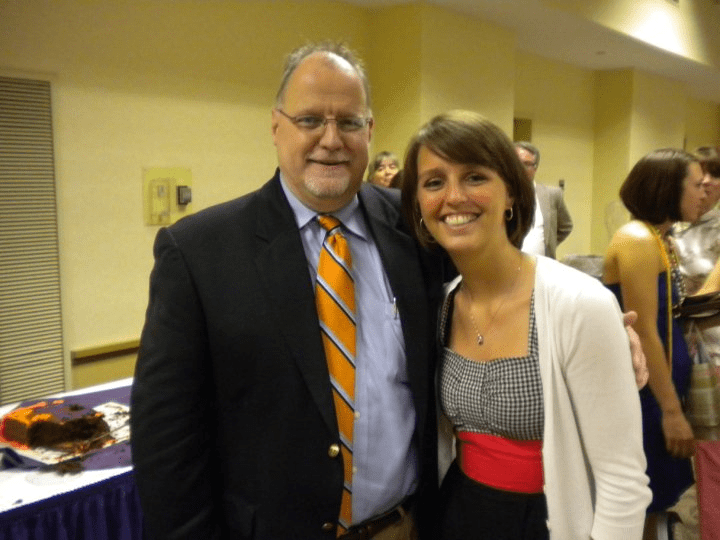
Anyone who has been part of the Clemson program, or even just crossed paths with it, knows the kind of heart Tony pours into everything he does. His love for the program, for the profession, and above all for his students is undeniable. Being in his class, you couldn’t help but feel his passion radiating through every lesson, every conversation, every encouragement. He didn’t just invest in our education, he invested in us as people. That kind of care left a mark, not only strengthening the program but shaping each of us in lasting ways. Decades later, he is still there—cheering us on in the comments, sharing our successes, and celebrating every milestone as if it were his own. Tony isn’t just a teacher; he is the very picture of what it means to teach with heart, and his legacy is written in the lives of his students. He taught me most about legacy and true investment.

Every teacher I’ve had throughout my life has left a mark on me in some way, through their patience, encouragement, creativity, and belief in me. Each of them added a piece to the puzzle that inspired me to become a teacher myself. I carry their lessons with me into my own classroom, hoping to honor the impact they had by teaching with the same care, passion, and dedication. My greatest hope is that my students will feel seen, supported, and inspired in the way my teachers made me feel, and that I can help spark a love of learning that stays with them long after they leave my class.

Within Eyesight

Sight, seeing, view, watch, see, look, vision, stare, observe.

Lay eyes on, take a glimpse of, take notice, catch sight of, get an eyeful.

These are just a few words and phrases that I thought of in regard to sight. And these are words that are spoken so casually every day.

This semester I have had one of the most challenging but yet one of the most rewarding experiences as a Student Affairs professional.

And maybe as a person too.

It has been “eye” opening so to speak.

This entire semester, I attended a Math class with a student who is blind. I am this student’s class aid.

Basically, I have been the student’s eyes all semester.

Did I mention it is in a Math class?

Now I was never well-equipped myself in the math area. And here I found myself trying to explain geometry shapes from dot paper and the properties of an isosceles triangle. I would catch myself on more than one occasion talking with my hands in the air to describe a shape-dang hand motions.

Every day in class, as the professor explained problems and wrote out equations, I attempted to show this student via math manipulative kits what exactly was going on.

We used various tools such as these:

This Geoboard became my best friend when trying to explain graphs and shapes.

These came in handy when we had to do reflections of shapes, and where the student was requested to draw things.

We used so many of these things as hand “visuals.”

Even here, I am using a visual to explain my point…see where I am going with this?

Math is so difficult. (I wish I would have paid more attention to my best friend’s math songs.)

So many days I would come back to the office just stuck and frustrated.

Stuck because I had no idea how to explain math. (I went into Social Studies for a reason.) As a visual learner myself, I very often was stumped on how to translate the visual of shapes and volumes .

Imagine adding circles to the this, and each angle being labeled and having to explain corresponding angles….my worst educational nightmare.

I was frustrated by how quickly the student was left behind to our own devices. We were usually two or three steps behind the rest of the class because it would take me a second to collect the information and then get the manipulatives set quickly to explain things while regurgitating the lecture with the objects we are using. I was frustrated that I couldn’t go faster, and frustrated that the rest of the class just moved along without us. Most of all, I was frustrated because I could see the answer but I had to keep my mouth closed. It was their math lesson to learn, not mine.

I was also an aide for a different student in a biology lab. Due to mobility issues, they needed someone to be their hands for various lab practicals. Ha, watching me put knocked out flies on lab slides and draw blood from a student’s finger was a trip…

These two classroom experiences allowed me to witness the myriad of things that students with disabilities face. Since I was just an observer, I picked up on so many things that I missed while attending school.

  • On one hand, you have professors who have no clue how to provide accommodations to make the material accessible so they just don’t (even though they are supposed to). For the most part this professor put forth the effort to make the math available, but there were moments where they were just as stumped as I was–like how to evaluate the student’s shape drawing abilities.
  • You have other students who want to rush through group work and wont take time to include the student. They will just do the work for them. Or they will get mad and say “this isn’t fair” if they have to do more clean up or set up because the physical part of the lab isn’t accessible to the student. In some instances, group work was like getting picked last at recess for these students.
  • Comments degrading students restrictions and limitations-just creating more barriers. I was dumbfounded at some of the things that are being said at the college level…
  • You have instructors who will eliminate parts of assignments and just let the student “skip” that material.
  • People are nervous about disabilities. You have the range from staring stupidly to full out ignoring the student. This nervousness factor alone causes so many reactions across the board that I could not even begin to explain them all.

However, I did see some awesome moments throughout the semester. There were several students who would speak up to help slow down the class if they saw us struggling. Some would offer to help tutor after class and plan study sessions together before big tests. I also had the chance to get to know these two individuals really well, which was a bonus for me to hear about them personally and academically. I saw professors do their best to find techniques like hooking a computer up to a microscope or spending hours puffy painting worksheets and providing wiki sticks for class work.

I am not perfect. This semester was so difficult and challenged me more than I would like to admit. I was frustrated when I couldn’t get the message across and felt like I was at a dead end. There were times that I said, “Well just look at it this way.” I often tried to move faster than I should have. Sometimes, I was nervous to challenge the student and wanted to go the easy way out.

But it wasn’t my educational experience on the line, so I had to buck up and admit that I needed help. I often stayed after class to ask the professors for advice and voiced my concern. On more than one occasion, I met with these students one on one outside of class to adjust our strategies and ensure we were on the same page with communication and expectations. At least once a week, I sat in my boss’s office to brainstorm strategies specifically for these students or found myself digging through boxes to find other manipulatives that we could use. It was a huge reminder that it isn’t about me. I am not in this field to help me. So I had to put away my fear of math and science and just dive right in with the students.

Bring it on bugs and math charts!

For these students, we need to work to make educational readily available. If that means that we have to stay a little extra, do more research, change the format to create the same result (without making it a freebie), and acknowledging the skills they bring to the table, that is our responsibility as educators. What works for one person, doesn’t work for all. Just because you get it, doesn’t mean that everyone is on the same page. So regardless of whether the student has a disability or not, I feel that this was a huge lesson/reminder for me.

Just because we are at a college level, that doesn’t give us the right to just leave people behind. I understand that students have to step up their game once they hit college courses. But I think educators should do the same, and often they are standing behind the guise of this is college so deal with it. We have to give them an equal chance to put in the work. If the student isn’t willing to perform, that is obviously on them. I am more than happy to tell a student they need to do more. They have the responsibility to ensure they ask the questions and speak up for their education. And when they do, we need to be sure to provide them with adequate tools to play the game.

You wouldn’t give a football player a tennis racquet to head into the Super Bowl. Why would you expect a student who is blind to understand what you are writing on the whiteboard?

Not only was the experience a life line for me among all the administrative work I had found myself in, it was a life line for my educator sole.

  • It taught me to always be vigilant towards injustice, because in this era of “equal rights for all”, those with disabilities are often forgotten.
  • It reminded me to be aware of what I say and how words as simple as “look at this” and all those listed at the beginning of this post can have an affect on someone’s perception and participation.
  • It taught me to slow down because although it may not be my first rodeo, the person whom I am working with, it may be their very first time out of the gate.
  • It taught me that you need to understand each student’s strengths and barriers in order to encourage them the best way possible.
  • It taught me that sometimes you have to keep your mouth shut in order for the student to learn, even if that means watching them fail.
  • It taught me how to be a better advocate for my students.
  • It encouraged me to ask questions when I was uneasy about a situation.
  • It taught me a whole lot about communication-verbally and especially non-verbally.
  • It taught me all things are relative within eyesight…

(Additionally, I have learned a lot about math and biology. Apparently when I don’t have to take the test, it soaks in a lot more. Not that I would ever need to know how to tell the sex of a fruit fly, but I can.)

On an unrelated note, there are a lot of “That’s what she said” moments in a biology lab. The pipette day alone…oh goodness.

One Fine Day

Now I know that the Chiffons are dancing in your head right now as you hum the tune “One Fine Day.”

My post has nothing to do with that song.

It’s just that one fine day I decided to go without shoes.

Last Tuesday, I participated in an event sponsored by TOMS shoes. This was a day where people around the world decided to ditch their shoes so we could put ourselves in someone else’s “shoes.” It was an event to raise awareness for awareness about global children’s health and education.

There were several at ISU that participated with me in this challenge.

I will say, I am not sure how many I actually spread the word to throughout the day, but it was a simple step for me to take a look at this issue.

Here are some of my personal observations from the experience.

1. Not wearing shoes is not the norm. People stared and did those double take looks. At first, many people were squeamish about the idea of it it. I found myself often throughout the day hiding my feet so people wouldn’t stare. I felt a little naked…And I even chose to go shoeless.

2. I walked different than I do with shoes. I found myself walking on my toes instead of the whole foot. Which one is better I don’t know, but I did it because I felt like I needed less of my foot to hit the ground to protect it.

3. Because of my high arches and walking abnormally as said above, my feet and knees were in pain by the end of the day without my hand dandy arch supports I slip into every pair of shoes I own.

4. I did not fully participate in the challenge because I knew there were places that I could not go without shoes like restaurants. I also didn’t feel comfortable going barefoot when I was outside with Grace. Who knows what would have happened if she would have ran after a bunny or leaf blowing in the wind. So there were parts of the day that I did slip my shoes back on. I couldn’t bring myself to even really go the full day.

5. I did go to public restrooms without shoes. All I have to say is that I feel fortunate that I was going in women’s restrooms. But there were comments made by others who wouldn’t go because they couldn’t bring themselves to go barefoot in the lavatory.

6. I am disgusted by things sticking to my skin. I rarely ever go barefoot normally because I hate feeling things stick to my feet. So I was constantly checking my feet and rubbing them clean on the hem of my dress.

It was a great experience for me. I feel empowered by it. It made me think about the access and privilege that I have. If you know me, you know that I have a pair of shoes in pretty much every shade, and I am always matching my outfits with my footwear. Do I feel guilty that I have this many shoes? To be honest, I don’t. I did not choose to be born into the family I am in so I cannot feel guilty about my lot in life and the opportunities that have been put in front of me. And I worked hard to have money to be able to afford many pretty things. I don’t think we should feel guilty about where we came from and what we have. But just because I do not feel guilt, doesn’t mean I didn’t learn something that I can change to help reach out.

I am humbled by this experience. It made me think about what I have and appreciate that I can take care of myself. Yep, I do have privilege. I am able to afford shoes that help with my bad arches and support my bad knees. I have shoes that aren’t of convenience or comfort, but that make me happy inside. I am able to wear shoes that give me the pass to participate in school and social events. Even within this one fine day, I was able to have the freedom to wear shoes as I needed. Something to think about there.

It makes you take in what you have and appreciate it, but also realize that with your privilege you should pass it on. A pay it forward message so to speak. I have made some promises to myself to do things that will help in the cause whether that is donation or education.We all have a contribution to make, but we have to decide that for ourselves with what is within our means and abilities.

Do I think that I can change the world? Eh, maybe not.

Do I think that I completely understand these situations because I went part of a day without shoes? Well no.

But I am doing my best to change myself to be a better human being who is appreciative of the life I have and try to give back wherever and whenever I can. You just have to put your best foot forward everyday.

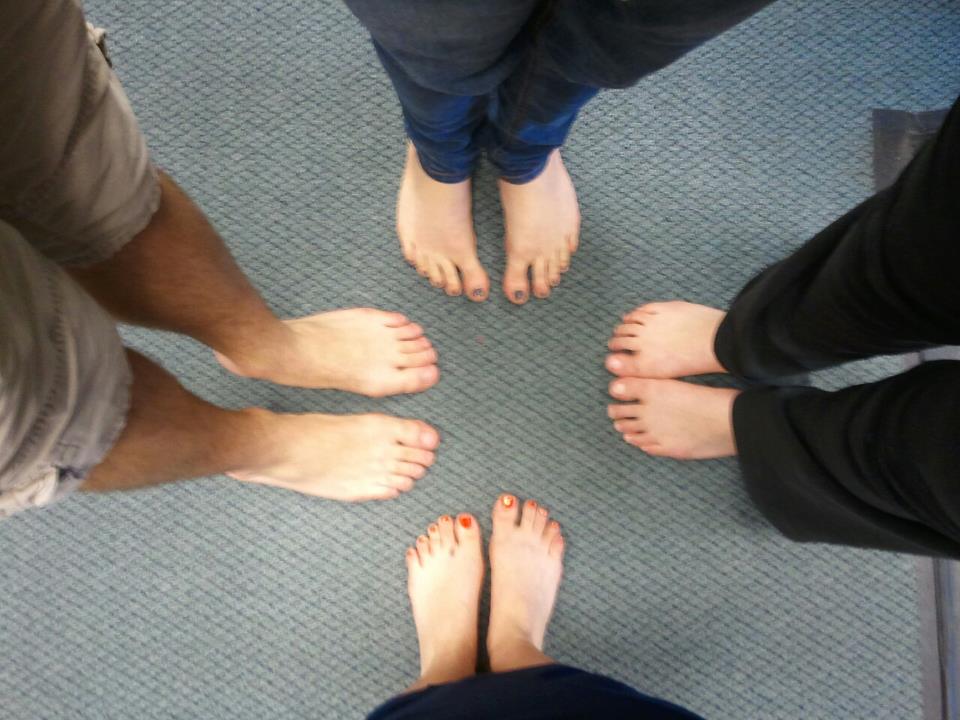
Here are some of my staff members and I going shoeless at the desk!

541304_10100176299841071_220472149_n

With that what can you do to make a simple step towards bettering either your life or someone else?

I don’t have a craft today. Eeeek I know! I have been working on a few things, and I really wanted to write this before I could complete anything.

So in a craft’s place I have a website that was shared with me for crocheting projects. I spent hours on it earlier today just perusing different patterns and making a wishlist of projects. And you can find a lot of free patterns!

ravelry.com

I am excited to start some new projects, but I have two in the works right now that I need to finish first. So I will just make a long list in the meantime.